What Does a Petrophysicist Actually Do? Here’s How I Explain It.
James L Hawkins
12/15/20252 min read
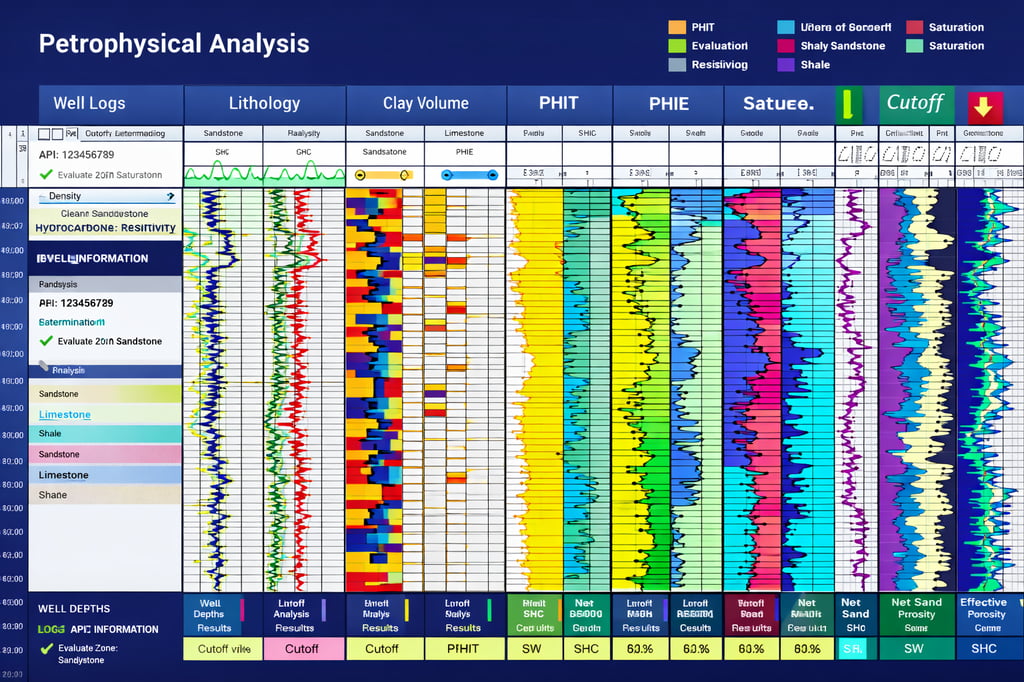
What Does a Petrophysicist Actually Do? Here’s How I Explain It.
I get asked all the time:
“So… what exactly do you do?”
And when I say “I’m a Petrophysicist,” the usual response is a polite smile followed by:
“Okay… but what is that?”
What Is Petrophysics?
Petrophysics is the science of understanding rocks and the fluids inside them.
In the oil and gas industry (and increasingly in geothermal and carbon storage), this means answering questions like:
• Does this rock hold hydrocarbons, water, CO₂, or nothing useful?
• How much fluid does it contain?
• How easily can that fluid move?
• Is this reservoir actually worth developing?
In other words:
We translate raw subsurface data into decisions.
What I Actually Do Day-to-Day
A big part of my job involves working with well logs, core data, and other measurements collected from the subsurface. But the real work happens before interpretation even begins:
1. Data Cleaning & Standardization
Different operators, contractors, and decades of historical wells all use different:
• Units
• Naming conventions
• Tools
• Depth references
• Formats
My job is to clean, correct, cross-check, and standardize all of that so the data actually makes sense.
A clean dataset is the foundation for everything else — and often the most time-consuming part.
2. Making Rocks Talk
Once the data is trustworthy, I use petrophysical models to understand:
• Porosity – How much empty space is in the rock
• Permeability – How easily fluids can flow
• Saturation – What percentage is oil, gas, water (or CO₂)
• Mineralogy – What the rock is made of
• Reservoir quality – Is it good, bad, or somewhere in between?
This is where experience really matters. Every formation is different, and the rock always has a story to tell.
3. Integrating Logs, Core, and Geology
Petrophysics sits at the intersection of:
• Geology
• Reservoir engineering
• Geophysics
• Drilling
• Production
• Data science
I take all these perspectives and turn them into a coherent picture of what’s happening below ground.
4. Guiding Decisions That Matter
Ultimately, petrophysics informs multimillion-dollar decisions:
• Where to drill next
• How to complete a well
• Whether a field is economic
• How to improve recovery
• How to store CO₂ safely
• How to manage risk and uncertainty
Petrophysics is where technical detail meets business impact.
Why It Matters More Than Ever
The industry is changing fast. Today’s petrophysicist works not only with oil and gas but also:
• Carbon capture and storage
• Geothermal development
• Hydrogen storage
• Advanced rock physics
• Machine-learning-driven workflows
But regardless of the technology, fundamentals remain the same:
Understand the rock.
Understand the fluids.
Enable better decisions.
So… What Do I Do?
I help companies make smarter subsurface decisions by transforming messy, inconsistent data into clear, reliable answers about the reservoir.